
Fast Web Builder Guide
How to Choose a Domain Name
Choose a domain people can spell, say, remember and trust, with practical tests for email, future growth and distinctiveness.

Key takeaways
- Say the name aloud and ask whether someone could type it correctly after hearing it once.
- Keep the spelling, length and punctuation simple enough for normal conversation and email.
- Choose a name that fits today without trapping the business in one product, place or trend.
- Check that the name is distinctive and does not create avoidable confusion with another organization.
Choosing a domain name is less about finding something “SEO perfect” and more about finding something normal humans can remember, spell, say, and trust.
If customers can hear it once, type it correctly, and recognize it later, you’re doing very well.
Pretend you’re saying it on the phone
This is one of the best tests.
Imagine telling someone:
“Our website is Riverstone Coffee dot com.”
Pretty painless.
Now imagine:
“It’s Riverstone with no E, dash coffee, the number two, dot online.”
You just turned ordering a latte into a hostage negotiation.
If the name constantly needs instructions, it is probably making your life harder than necessary.
Try the business-card test
Write the domain down.
Does it look professional?
Can your eye separate the words?
Could somebody read it correctly without squinting?
Some combinations of words look perfectly obvious when spoken and strangely confusing when smashed together into a domain.
That’s normal.
Seeing it written often catches problems your ears missed.
Try the email test
Now put a name in front:
jane@riverstonecoffee.com
Still good?
Great.
Professional email is one of the places your domain may appear most often, so don’t choose a name that only works as a giant website headline.
Don’t make “short” the only goal
Short can be wonderful.
But qzx.io being shorter than riverstonecoffee.com does not automatically make it better for a coffee business.
Clarity beats brevity when the short version makes everybody ask:
“Wait, what was that again?”
The goal is not fewer letters.
The goal is less friction.
Give your future business some elbow room
Imagine where the company could go.
If you call the business:
everettlaptoprepair.com
what happens if you later:
- repair phones;
- provide managed IT;
- open in Tacoma;
- sell equipment?
Maybe the specific name is exactly what you want.
But make that choice consciously.
A domain can become part of the business identity for years. Give Future You a little breathing room.
Do keywords matter?
Descriptive words can be useful.
If you sell bicycles, having “bike” somewhere in the brand may make perfect sense.
But don’t treat your domain like an SEO grocery list.
Something like:
best-cheap-bike-repair-near-me.com
is not a brand. It is a cry for help.
Your website content can explain what you do.
Your domain’s job is to help people remember who you are.
What if .com is taken?
You have options.
You could:
- use another extension that fits;
- make a clean change to the brand name;
- see whether the existing domain is legitimately for sale;
- pick another name.
What you should not do automatically is keep adding dashes, numbers, and filler words until something finally registers.
Availability is important.
So is dignity.
Watch for look-alike businesses
Before falling in love with a name, search for similar businesses.
A domain can be available while the name itself creates confusion with another company.
This is especially important when you’re building something commercial.
A domain search checks domain availability. It is not a legal trademark clearance.
If the name is important enough that a dispute would seriously hurt the business, appropriate legal advice is worth considering.
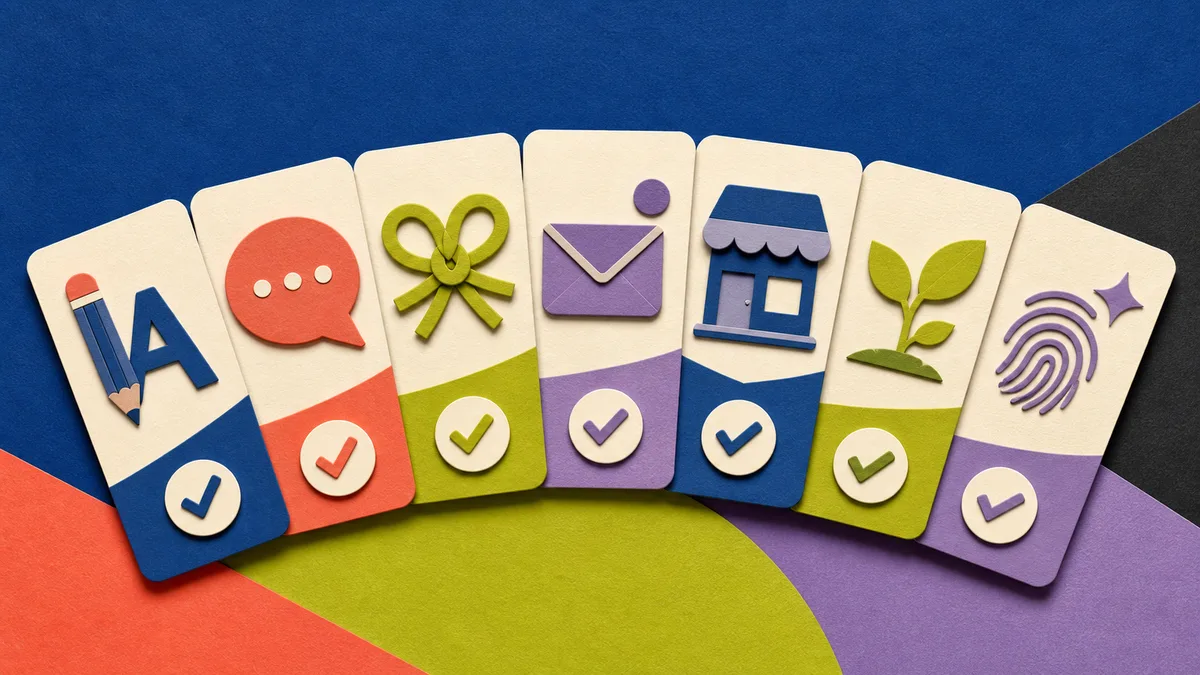
The seven-point test
Give the name a point for every yes:
- Can I spell it after hearing it?
- Can I pronounce it after seeing it?
- Can I remember it?
- Does it look good in email?
- Does it sound like a real business?
- Can the business grow without outgrowing it?
- Is it clearly different from competitors?
You don’t need seven out of seven.
But if you’re at three, keep shopping.
The part worth remembering
The best domain usually isn’t the cleverest.
It’s the one that quietly does its job every day without needing an explanation.
Customers can remember it.
Employees can say it.
Email looks normal.
The business can grow.
That’s a win.
Put your shortlist to a real availability check.
Search each candidate with the extension you want, then compare the complete names side by side.
Search your shortlist →